Sleep deprivation is not a productivity problem. It is a health crisis. Nearly one-third of adults worldwide report consistently poor sleep, and the downstream costs- medical, economic, human are staggering. Most solutions on the market are either too passive to matter or too invasive to stick with. A white noise machine here. A sleep tracker is strapped to your wrist there. Nothing that actually intervenes at the right moment.
That is the gap Kimba is walking into. The New York-based sleep tech startup just raised $6.5 million in seed funding, and if you spend five minutes understanding what they have built, you start to see why three separate VC firms showed up for this round.
What Is Kimba and What Does It Do?
Kimba is a sleep tech company founded by Ben Fuxbruner, who serves as CEO, alongside co-founder Gabi Beck. The company was founded in 2023 and is building a device-plus-subscription platform designed to improve sleep through real-time biometric monitoring and targeted scent delivery.
Yes, scent delivery. Stay with me.
The idea is not as fringe as it sounds. Scent has a direct neurological pathway. It bypasses the slow processing routes that most sensory input takes and connects almost immediately to the parts of the brain that regulate emotion, memory, and arousal. Kimba is building hardware that exploits that pathway at precisely the right biological moment.
The founding team brings hardware and software experience together for a problem most consumer tech companies have treated as a side category. That is changing fast.
Kimba Raises $6.5 Million in Seed Funding
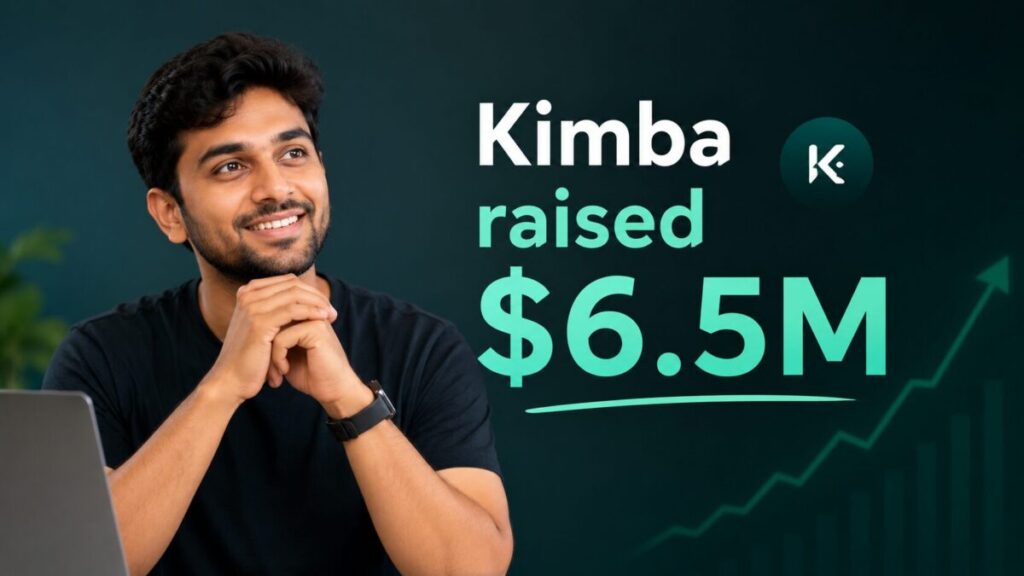
Kimba raised $6.5 million in seed funding. CEO Ben Fuxbruner confirmed to Axios Pro exclusively that the company plans to begin Series A conversations next year.
That is a tight timeline. And it tells you everything about how the team is thinking.
This is not a “raise money and figure it out” situation. The $6.5 million has a job to do, and the team has roughly twelve months to build the numbers that make a Series A story believable. For a hardware-first startup, that kind of urgency is either reckless or very well-planned. Based on the investor list they assembled, it looks like the latter.
The reality is, a $6.5 million seed round for a hardware company with a subscription layer is a vote of confidence that goes beyond polite interest. These firms did not have to come in at this stage. They chose to.
Who Invested in Kimba’s Seed Round?
Selva Ventures led the round. Able Partners and Resolute Ventures joined alongside.
That syndicate matters. Three firms at the seed stage, rather than one lead writing the whole check, signals genuine conviction from multiple independent investment teams with different theses. When people with different filters all land on the same bet, that is worth paying attention to.
Selva Ventures has a track record in consumer health and wellness. Able Partners focuses on early-stage companies solving everyday problems. Resolute Ventures rounds out a group that clearly sees sleep as a category worth owning before it gets crowded and expensive.
And it is getting crowded. So getting in now, at seed, with a differentiated product is the right move.
How Does Kimba’s Sleep Tech Device Work?
Here is the kicker. The device does not go on your body.
It sits on your nightstand. It contains microphones and light sensors that detect when someone is about to wake up, based on live monitoring data, and delivers scents designed to help induce or maintain sleep. No wristband. No ring. No headband do you forget to charge.
That removal of friction is significant. One of the biggest adoption problems in wearable health tech is that people simply stop wearing things. The habit breaks. The charger is across the room. The band feels uncomfortable. Kimba sidesteps that entire category of failure by keeping the device off the body entirely.
But it can still connect to what you already wear. The device integrates with wearables from Apple, Garmin, Oura, and Whoop to track cardio and respiratory rates, layering that data on top of its own ambient sensing. If you own an Oura ring, it talks to Kimba. If you own nothing, Kimba still works.
That flexibility is not a small engineering decision. Building something that functions as a standalone product and also plays well with the most popular wearable ecosystem is genuinely hard. They did both.
So the scent delivery is not guesswork. It responds to what the device is reading in real time, targeting the moments when intervention can actually shift your sleep state rather than just masking the symptom.
Why Investors Are Betting Big on Sleep Tech
Let’s be honest. Sleep tech was not always a serious investment category. For years it sat somewhere between a wellness lifestyle and a medical device, never quite landing in either camp comfortably.
That has changed.
Eight Sleep raised a $50 million Series D1 round led by Tether Investments at a $1.5 billion post-money valuation in March. A $1.5 billion valuation for a sleep product is a number that recalibrates how you think about this category. That is not a niche play. That is a scalable consumer health business.
Investors are seeing what the data has been saying for years. People spend money on sleep. Real money. And they keep spending it because the problem does not go away on its own. Recurring revenue tied to a daily physiological need is about as defensible a business model as you can find in consumer health.
The subscription element makes Kimba particularly interesting on paper. Hardware margins are brutal. But hardware plus subscription changes the unit economics entirely. Predictable monthly revenue, measurable retention, long customer lifetime value. The financial model starts looking less like a gadget company and more like a health platform.
What Will Kimba Do With the $6.5 Million?
For any hardware startup at seed stage, the capital allocation question is the most important one. Get it wrong and you burn eighteen months building something the market cannot use yet. Get it right and you walk into your Series A with proof.
Kimba’s $6.5 million will almost certainly go toward three things.
Product development comes first. Getting from a working prototype to a consistent, manufacturable consumer product is expensive and unforgiving. Sensor calibration, scent diffusion precision, firmware reliability at scale. Every detail has to hold up across thousands of units before you can responsibly sell to the public.
Then the subscription infrastructure. The software layer is as important as the hardware here. Building a platform that can support personalized scent recommendations, sleep reporting, and live integration with Apple, Garmin, Oura, and Whoop requires sustained engineering investment over months, not weeks.
And finally, real users. Before a Series A conversation happens, Kimba needs retention data from actual customers sleeping with the device night after night. Renewal rates. Reported outcomes. That is the proof that converts a compelling pitch into a fundable round.
What’s Next for Kimba After This Funding Round?
Ben Fuxbruner has said the company will start Series A conversations next year. That clock is already running.
The sleep tech category is moving fast. Eight Sleep crossed the unicorn mark. Competing products are finding loyal subscriber bases. The window for a new entrant to establish real authority is open right now. But it will not stay open forever. These windows never do.
What works in Kimba’s favor is the approach itself. Most sleep solutions ask you to change your behavior. Wear this. Download that app. Adjust your schedule. Kimba asks almost nothing of the user beyond placing a device on a nightstand. The product adapts to you, not the other way around.
And that, in a category full of products requiring discipline and habit formation, might be the most underrated advantage they have. Friction kills adoption. Kimba is designed around removing it.
The $6.5 million gives them the runway to prove it works. Now it is about execution. That part no amount of funding can shortcut.
Read about – Startup business models
Read in – Startup Directory
Read about Solo businesses

Hi Friends, This is Swapnil; I love reading and sharing knowledge. Currently working as a content writer at startupsunion.com. You all can hang out with me here.