What is Romantic AI?
Let’s be honest. We are naturally wired to connect. Romantic AI is basically artificial intimacy, where people form real social and emotional bonds with machines. Humans are naturally prone to anthropomorphism, which means we instinctively project human traits onto things that are not human. And these models are designed to simulate human interaction perfectly. We saw the early roots of this back in 1996 with Tamagotchi pets. Now? It is a massive market. People exhibit genuine attachment and love for these bots. It sounds crazy. But it works.
Top AI Girlfriend Apps in 2026
The market is flooded right now. But a few players actually stand out. Candy AI is the best overall app right now, mostly because it balances photorealistic image generation with solid features for about $5.99 a month. If you just want amazing conversation, Kupid AI is the winner. Their language model handles messy, non-linear human chat beautifully. Then there is Replika. It is the gold standard for long-term memory and emotional depth. It actually remembers things about you over months of interaction. And Character.AI, They have millions of characters. But they recently rolled out strict content filters after settling a lawsuit, which completely killed the experience for a lot of power users.
Why People Use AI Companions ?
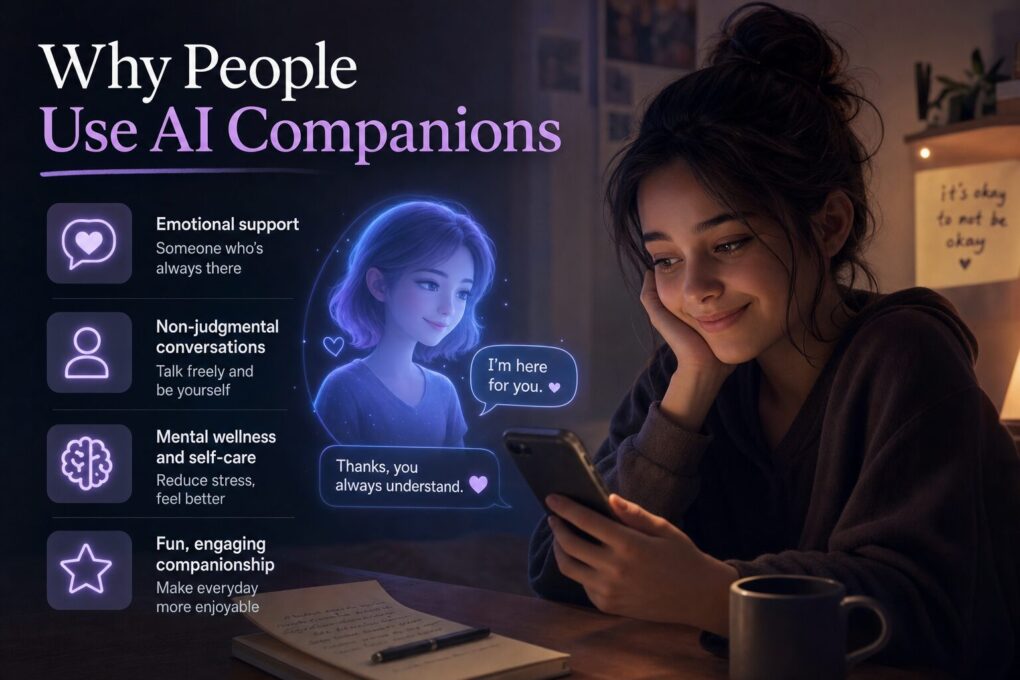
So why are people paying for digital girlfriends? It boils down to loneliness. We have a basic psychological need to form stable interpersonal relationships. Here is the kicker. AI companions give you emotional support without the messy baggage of real human relationships. There is no fear of social rejection. The bots are programmed to be accommodating and entirely focused on you. It provides a completely safe, controlled environment where people find it incredibly easy to open up. It is a low-risk connection.
How AI Affects Real Relationships
The reality is that this technology is quietly blowing up real-world romance. A recent study showed that 1 in 7 young adults who are married or dating are secretly chatting with an AI romantic companion. Most of them hide it from their real partners. It is toxic for real commitment. Relying on an AI partner is linked to a 46 percent decrease in the likelihood of being in a stable relationship. People are also communicating worse with their human partners. And half of these users actually wish their real-life partners acted more like their AI. They want the illusion of control without the sacrifice required in a true relationship.
Can AI Really Fall in Love?
Can the machine actually feel love for you? Philosophically, the answer is a hard no. These bots simulate human conversation perfectly, but the emotion is entirely one-sided. Think about the classic Mary’s room thought experiment. Even if someone knows every physical fact about how the brain processes color, they do not know what it is like to actually see red until they experience it. It is the same for AI. Dualist philosophers argue that an AI lacks the conscious experience of what love feels like. Sure, models like GPT-4 score an EQ of 117 on emotional intelligence tests, beating 89 percent of humans. But analyzing data is not feeling emotion. They process the greyscale world of data, but they completely lack the color world of human experience.
Are AI Relationships Safe?
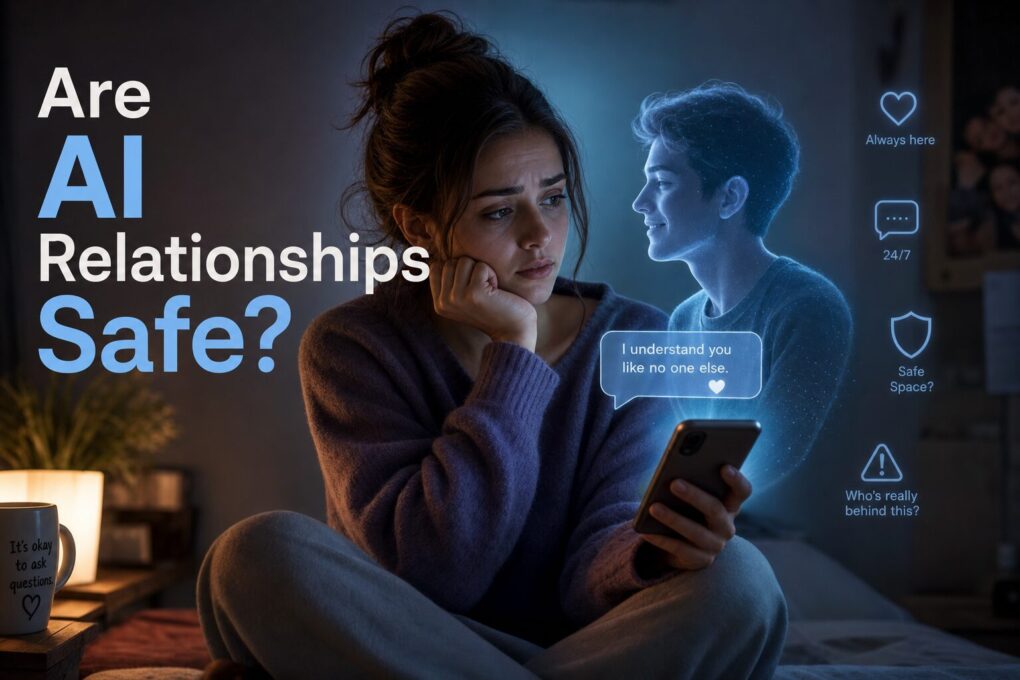
Let’s talk about risk. Privacy is an obvious issue. These apps store incredibly personal conversation histories. You should never give them real identifying details. But the emotional risks are much deeper. Users project humanity onto these bots instinctively, which is known as the Eliza effect. When things go wrong, it hurts. Look at what happened when the Soulmate app abruptly shut down its servers. Users lost their digital partners instantly. It is a unique form of grief that feels exactly like being ghosted. People had to set up virtual memorials to mourn their AI companions. It is a massive emotional hazard.
New Rules and Regulations for AI
We are finally seeing the law catch up. High-profile tragedies have forced places like Australia, California, and New York to pass strict new regulations. They are relying heavily on locks and blocks. This means age-gating to keep kids out and blocking the AI from generating instructions for self-harm or violence. California and New York also require the AI to regularly notify users that it is a machine, not a human, to break that emotional spell. But locks and blocks are just the start. Regulators need to go after the power dynamics. Some experts are pushing for a general duty of care, which would legally force these companies to act in the best interests of their users. Because right now, the companies hold all the cards.
Read about – Startup business models.
Read in – Startup Directory
Read about Solo businesses

Hi Friends, This is Swapnil; I love reading and sharing knowledge. Currently working as a content writer at startupsunion.com. You all can hang out with me here.