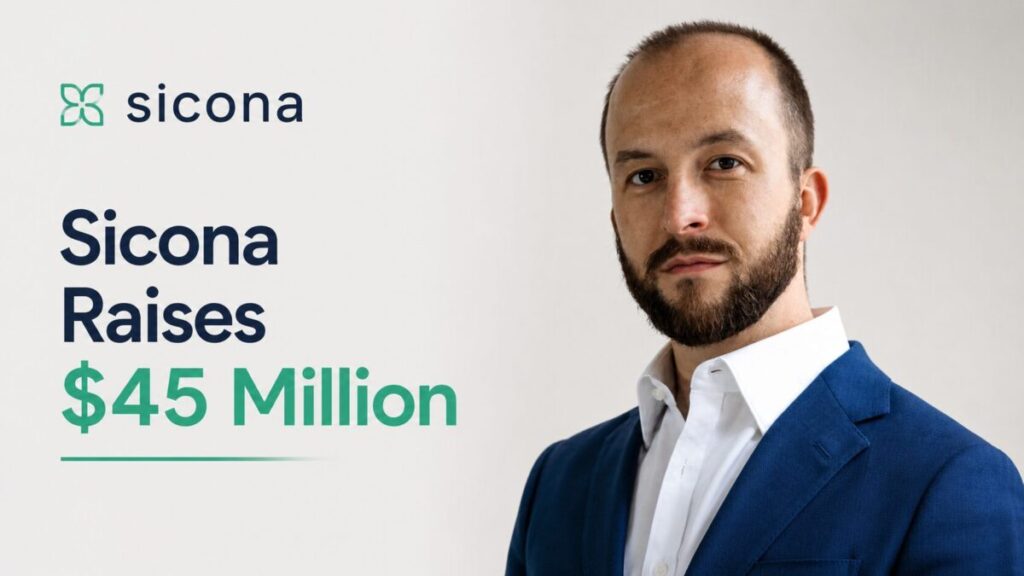
Most funding announcements are noise. You read the headline, scroll past the PR quotes, and forget it by lunch. But when Sicona Battery Technologies raises $45 million from Australia’s federal government, that is not noise. That is a real signal. The kind that tells you something meaningful is shifting in the global battery materials race, and a Wollongong-based scaleup just became one of the teams worth watching closely.
Let me walk you through what actually happened here and why it matters far beyond Australian shores.
What Is Sicona and What Does It Do?
Sicona Battery Technologies was founded in 2019 by CEO Christiaan Jordaan and materials scientist Andrew Minett. These are not first-time founders who stumbled into battery materials from a business school case study. The pair worked at the University of Wollongong’s Australian Institute for Innovative Materials for more than a decade before taking the technology out of the lab and building a company around it.
That history matters. Deep-tech companies that come out of decade-long research programs start with a different foundation than most startups. The science is further along. The failure modes are already understood.
Sicona develops next-generation battery materials technology used in the anodes, the negative electrodes, of lithium-ion batteries that enable electric mobility and storage of renewable energy. The core idea is replacing graphite, the material sitting inside the anode of nearly every lithium-ion battery in the world today, with silicon. And the performance numbers from that swap are not subtle.
Sicona’s silicon-composite anode technology delivers up to 233% higher capacity than conventional graphite anodes, and its anode materials can deliver 50% to 75% higher cell energy density than current Li-ion batteries.
That is not an incremental improvement. That is a different class of performance entirely.
Sicona Raises $45 Million: What We Know
Australia’s federal government body, the Australian Renewable Energy Agency (ARENA), has backed Sicona Battery Technologies with $45 million in grant funding, drawn from ARENA’s Battery Breakthrough Initiative.
Notice what this is. Grant funding. Not equity. ARENA is not taking a stake in Sicona. It is making a targeted, national-interest investment in technology it believes genuinely matters. When a government agency backs a company at this scale with non-dilutive capital, it says something important about the perceived significance of what the company is doing.
But Sicona raising $45 million from ARENA did not happen in a vacuum. The company previously raised $15 million in May 2025 led by existing Indian investor Himadri, a $22 million Series A in 2023, and a $3.7 million pre-Series A in 2021. By the time this ARENA announcement came, Sicona had already built a consistent, multi-year track record of raising capital and hitting milestones. That track record is part of why the government felt confident writing a cheque at this scale.
The reality is, deep-tech startups that make it to the commercial manufacturing phase are rare. Most die somewhere in the long, expensive gap between a working prototype and production-ready scale. Sicona is now funded to cross that gap.
Who Led the Sicona Funding Round?
The $45 million came from ARENA. But Sicona’s broader investor base is worth understanding properly. Investors include Energy Laboratory, Gaingels, Himadri Specialty Chemical, Investible, and SAIC Capital, among a total of 20 investors.
Himadri is the name that keeps coming up. For good reason. As part of a royalties deal, Himadri has licensed the IP for Sicona’s silicon-carbon anode material, SiCx, to establish a production facility in India targeting the automotive sector. This is not passive financial backing. Himadri is building an actual plant. That is a completely different level of conviction in the technology.
Other investors include Riverstone Holdings, Artesian VC, Chaos Ventures, and Waratah Capital Advisors. Australian venture capital. Global institutional funds. Industrial strategic partners. That mix signals something. You do not pull together 20 investors across geographies and investor types on a shaky bet.
ARENA CEO Darren Miller said the technology has undergone independent testing and is already being evaluated by global battery manufacturers and electric vehicle companies, highlighting its strong commercial potential. Not speculative backing. Informed conviction based on verified data.
How Sicona’s Silicon Anode Technology Works
The core product is SiCx, a silicon-carbon composite anode material. SiCx improves Li-ion battery performance by over 20% and improves charging speeds by more than 40%.
Here is the kicker on silicon. It holds far more lithium ions than graphite during a charge cycle. More ions, more stored energy, in the same physical footprint. The catch is that silicon expands when it charges and contracts when it discharges. Do that enough times and the material cracks. Degrades. Fails. That is the problem that has kept silicon anodes out of mass-market batteries for years.
Sicona’s answer to that problem is technically specific. They have developed a water-based binder with a 3D network structure, improved electro-conductivity, and self-healing properties that significantly increases the cycle life of next-generation anodes.
Self-healing properties. Let that land.
And then there is the manufacturing angle, which does not get enough attention. Sicona uses off-the-shelf equipment in a highly scalable and efficient manufacturing process to produce its active anode materials and polymer binder. You do not need exotic production machinery. You do not need to invent new manufacturing infrastructure from scratch. That simplifies scale-up enormously and cuts capital risk. It is the kind of operational detail that separates companies that can actually grow from ones permanently stuck in the pilot phase.
Why Investors Are Betting Big on Sicona
Let’s be honest. Most people hear “battery startup” and immediately think electric vehicles. That is fair. EVs are a massive and growing driver of demand for what Sicona is building. But CEO Christiaan Jordaan made a point worth paying attention to.
He said, “While EVs remain a major opportunity, some of the fastest-growing demand is coming from AI data centres, robotics, drones and power tools. These applications need high energy and power density today.”
That is the shift many battery sector watchers are still catching up to. The energy storage demand coming from AI infrastructure alone is staggering. Data centers running large-scale machine learning models need reliable, dense, fast-charging power systems. Robotic manufacturing floors need batteries that run long, charge fast, and survive heavy cycle loads.
SiCx was engineered to directly tackle two major barriers to EV adoption: limited range and long charge times. But the same properties that solve those EV problems are exactly what these other high-growth sectors need right now.
So. A multi-sector demand story. A proven material. A manufacturing process that does not require exotic infrastructure. And a geopolitical push to build battery supply chains outside China’s dominance. Add it all together, and you understand why serious investors backed Sicona, raising $45 million without hesitation.
How Sicona Plans to Use the $45 Million
This is where the story stops being about potential and starts being about execution.
Sicona will use the ARENA funds to build its first commercial-scale manufacturing facility in the Port Kembla precinct, in partnership with BlueScope Steel. The plan is to produce up to 230 tonnes of SiCx annually at that facility. The site is expected to create up to 36 skilled manufacturing jobs in the Wollongong region.
But Port Kembla is one node in a much bigger production strategy.
Sicona recently announced plans to build a 6,500-tonne-per-annum commercial production facility in the southeastern United States, with long-term plans to expand capacity there to 26,500 tpa on a single site. And Himadri is separately building the India facility under the licensing agreement. Three sites. Three continents. All moving in parallel.
Jordaan has been clear that this partnership structure enables Sicona to commercialize SiCx at unprecedented speed and scale, without shouldering the full financial burden of building first-of-a-kind facilities alone. That is a sharp capital strategy. You build faster when you build through partners who are already paying for their own plants.
What Sicona’s Raise Means for the Battery Industry
This is bigger than one company. Sicona raising $45 million from a national government agency sends a clear message to every battery manufacturer, EV company, and materials startup watching from the sidelines.
Competitors in the silicon anode space include Sila, Group14 Technologies, NanoGraf, and Advano. The race to commercial-scale silicon anode production is global and already well underway. But most of those players are US-based and US-funded.
Sicona is positioning Australia as a genuine player in advanced battery materials manufacturing. Not just a supplier of raw critical minerals dug out of the ground and shipped overseas, but also a country capable of producing finished, high-value battery technology at commercial scale.
And look, the battery industry has been talking about silicon anodes replacing graphite for years. The technology always worked in the lab. Getting it into mass production has been the hard, expensive, grinding part that stops most companies cold.
Sicona is building the plant. The $45 million makes that real.
Sources used in this Article
Read about – Startup business models
Read in – Startup Directory
Read about Solo businesses

Hi Friends, This is Swapnil; I love reading and sharing knowledge. Currently working as a content writer at startupsunion.com. You all can hang out with me here.