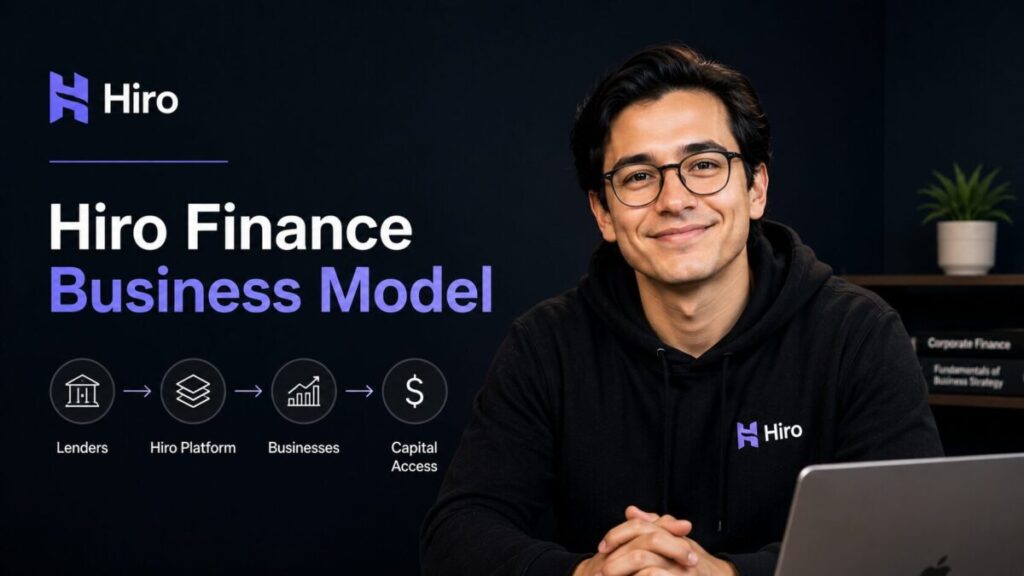
Most personal finance apps tell you what you already did. Hiro wanted to tell you what to do next. That is a small distinction on the surface. But in practice, it is the difference between a rearview mirror and a windshield. Founded in San Francisco by serial entrepreneur Ethan Bloch and co-CEO Rushabh Doshi, Hiro Finance built an AI-powered planning tool that was less a budgeting app and more a personal Chief Financial Officer. One available to regular people, not just the rich. Its journey from seed round to OpenAI acquisition in under three years is worth understanding, because it says something real about where fintech is heading.
How Hiro Finance Started (Problem, Solution, Target Audience)
The Problem
Here is the honest truth about personal finance in America: good advice has always been expensive. If you have a few hundred thousand dollars sitting around, a wealth manager will gladly take your calls. If you do not, you are largely on your own. You get generic articles, one-size-fits-all calculators, and apps that cheerfully tell you that you spent too much on restaurants last month. Great. Now what?
Tracking spending is not planning. That gap, between knowing where your money went and knowing where it should go, is where most people get stuck. And it costs them, in missed savings, bad debt decisions, and financial anxiety that compounds quietly over years.
The Solution
Bloch had been here before. He built Digit, a personalized savings and banking app that Oportun eventually acquired for around $230 million. So when he co-founded Hiro in 2023 alongside Rushabh Doshi, he was not guessing at the problem. He had spent years watching people struggle to make smart financial decisions without the right tools.
Hiro’s platform connected directly to users’ real financial accounts, credit cards, savings accounts, loans, and then modeled scenarios based on actual data. Ask it what happens if you throw an extra $300 at your student loan every month. Ask it whether you can afford to go part-time for a year. The platform was specifically trained to handle financial calculations with accuracy, and it gave users the ability to verify the outputs. That last part matters. People do not blindly trust software with their money. Hiro knew that.
The company claimed its platform helped users plan for and manage more than $1 billion in assets. For a team of fewer than 50 people, that is not nothing.
Target Audience
Hiro was built for people who are doing okay financially but feel like they are flying blind. Millennials juggling student debt and retirement savings goals simultaneously. Dual-income couples staring at a mortgage decision. Young professionals who make enough to have real financial choices but not enough to afford a private advisor. That is a massive group. And for the most part, nobody was serving them well.
Competitive Advantage
So what made Hiro different? A few things, and they all connect.
First, scenario modeling. The whole market was obsessed with tracking and categorizing past spending. Hiro went forward. It asked: what happens next, depending on what you decide? That is a fundamentally different product.
Second, real account integration. No manual entry. No spreadsheets. The platform pulled live data from users’ actual financial lives, which meant its recommendations were grounded in reality, not estimates.
Third, verifiable outputs. This one is underrated. Generic AI tools spit out financial answers with no audit trail. Hiro built in a layer where users could actually check the math. In a domain built on trust, that is a real differentiator.
And then there is the founder factor. Bloch had already built and sold a major fintech company. That kind of domain depth is hard to replicate. He understood not just the technology but the psychology of how people relate to money. That shows up in product decisions in ways that are difficult to articulate but easy to feel when you use the product.
The investor backing reinforced all of it. General Catalyst, Ribbit Capital, and Restive Ventures put in $6.3 million. Ribbit, in particular, is a name that signals serious fintech credibility to partners, regulators, and early users alike.
Marketing Technique
Let’s be honest: Hiro was not running Super Bowl ads. It was a lean startup with a focused go-to-market approach, and it leaned into what it had.
Bloch himself was a significant marketing asset. His track record as a repeat founder generated organic press from outlets like TechCrunch and Business Insider without requiring a big PR budget. When a credible person says “I am building the AI personal CFO,” journalists pay attention.
Beyond earned media, Hiro cultivated early users in personal finance communities where trust-based word of mouth works better than any paid channel. Reddit forums, financial independence communities, fintech-focused social media. These are spaces where a genuine recommendation from a real user carries real weight.
The investor roster served a quiet marketing function too. Ribbit Capital on your cap table is a signal to the market. It tells potential users, potential partners, and potential regulators that someone rigorous has already done the diligence. You do not need a billboard when your investors do the talking.
How Hiro Finance Makes Money
Hiro Finance’s specific revenue figures were not publicly disclosed. The company was still in early stages of monetization at the time of its acquisition, so a detailed breakdown is not available from public sources.
Market Share of Hiro Finance
The personal financial management software market was worth roughly $1.5 billion globally in 2024, growing steadily as AI capabilities start to shift what these tools can actually do. Hiro was competing against established names like YNAB, Copilot, and Monarch Money, as well as AI-native players like Cleo.
The reality is, Hiro was a small player by any conventional measure. Sub-1% market share by revenue. A team of fewer than 50. But here is the thing: it had been live for only about five months before OpenAI acquired it. You do not evaluate a sprinter at the starting block.
The $1 billion in assets under planning is the more meaningful signal. That suggests real users making real decisions on the platform, not just people who downloaded the app and forgot about it.
Business Model Canvas of Hiro Finance
| Block | Detail |
|---|---|
| Value Proposition | An AI-powered personal CFO that models real financial scenarios, making personalized financial guidance accessible to everyday consumers |
| Customer Segments | Financially aware millennials and Gen Z adults; dual-income households; consumers managing debt alongside savings goals |
| Channels | iOS/Android app; web platform; App Store; organic press and digital marketing |
| Customer Relationships | Self-service AI assistant with verifiable outputs; in-app financial nudges and scenario tools |
| Revenue Streams | Not publicly disclosed |
| Key Resources | Proprietary AI model trained for financial calculations; account integration infrastructure; founding team expertise; investor network |
| Key Activities | AI model development; financial account data integration; user experience design; regulatory compliance |
| Key Partners | Financial data aggregators; cloud infrastructure providers; investors including Ribbit Capital and General Catalyst |
| Cost Structure | AI compute and model training; engineering talent; data licensing fees; compliance; marketing |
Conclusion: Is Hiro Finance a Viable Business?
Short answer: it was viable enough for OpenAI to buy it.
On April 13, 2026, OpenAI acquired Hiro Finance in a full acqui-hire. The entire team joined OpenAI. The product shut down on April 20. By traditional startup standards, that sounds like a failure. It is not. Acqui-hires happen when the people and the idea are valuable enough to own outright. OpenAI did not buy Hiro’s user base. It bought the vision, the expertise, and the proof of concept.
But let’s look at this honestly. Hiro never achieved scale as a standalone business. It raised $6.3 million, operated for two to three years, and launched its product only months before shutting it down. The consumer fintech market is relentlessly competitive. Building trust around personal financial data is slow. Expensive. And most startups that try to do it do not make it.
So was it a viable independent business long-term? Probably not, at least not on that timeline and at that funding level. It takes significantly more capital and more time to build the kind of user trust that personal finance products require.
But here is the kicker. Hiro proved something important. It showed that AI could credibly act as a financial advisor for ordinary people, not in a gimmicky chatbot way, but in a way grounded in real account data and real financial math. OpenAI recognized that. The team that built it is now inside one of the most powerful AI companies on the planet, with the resources to actually pursue the original vision at scale.
Bloch put it well himself: “For decades, personalized financial guidance has been too expensive, too generic, or too hard to access.” Hiro did not solve that problem as an independent company. But it laid the groundwork for someone bigger to try. And sometimes, that is exactly what viable looks like.
Read about – Startup business models
Read in – Startup Directory
Read about Solo businesses

Hi Friends, This is Swapnil; I love reading and sharing knowledge. Currently working as a content writer at startupsunion.com. You all can hang out with me here.