Let’s be honest. Getting your team to sit through a two hour corporate training video just does not work anymore. People are busy. Attention spans are shrinking. The reality is that if you want your employees to actually learn something, you need to deliver it fast. That is where microlearning comes in. I have looked at a lot of tools out there to solve this problem. Today, I want to talk about one that stands out. It is called Code of Talent.
What is Code of Talent?
Code of Talent is an AI powered microlearning platform built specifically for fast paced environments. Think sales teams, operations, and frontline workers. It does not force your team to sit at a desk. Instead, it delivers highly compressed learning sequences right to their phones. It is short. It is punchy. But it works.
The platform restricts learning intervals to a maximum of 10 to 15 minutes. This perfectly matches the working memory and attention span of the human brain. By using concepts like Cognitive Load Theory, it cuts out the noise and gives your team exactly what they need to know without overwhelming them.
How Does Code of Talent Work?
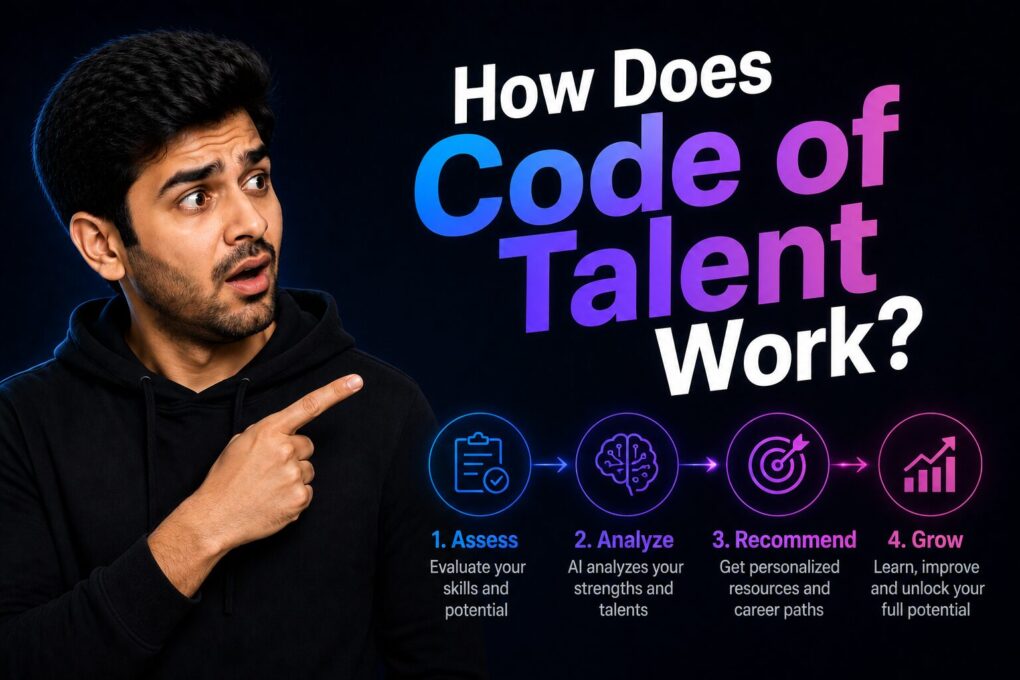
You might be wondering how you actually get people to change their behavior. The reality is that passive reading is dead. Code of Talent operates on a simple idea. It turns passive knowledge into active execution.
It uses four core principles. First, it is flexible and self paced. Second, it includes instructor and manager assistance to provide expert feedback. Third, it relies on peer to peer social learning. And finally, it uses heavy gamification. So instead of just clicking “next” on a slide, employees have to complete actionable tasks called missions. They learn something, and then they immediately apply it to their actual jobs.
Key Features of the Platform
A tool is only as good as what it allows you to do. Code of Talent has a few specific features that I really appreciate. First, it uses an AI learning journey generator. This means the software looks at an employee and creates a customized path just for them. They only see what is relevant to their specific goals.
Then there are the missions. Learners upload text, images, or videos to prove they understand the material. And we cannot ignore the gamification. Employees earn badges, rack up points, and track their energy levels. It turns a boring compliance training into an engaging game.
Finally, it gives managers real time analytics. You can track engagement rates, daily active accounts, and exact completion rates. You know exactly who is learning and who is falling behind.
Code of Talent Pricing and Plans
Budget matters. We all know that. Here is the kicker about the Code of Talent pricing structure. It is surprisingly accessible for teams of different sizes.
They give you a free trial to test the waters before you spend a dime. If you decide to commit, the Basic plan costs €7.99 for 25 users per year. If you have a larger team, their Partner plan is €4.99 for 200 users per year. And if you are running a massive corporation, you can contact their sales team for a custom Enterprise quote.
Pros and Cons of Code of Talent
Let’s be honest. No software is perfect. Based on verified user feedback on G2, Code of Talent holds a 4.8 out of 5 star rating. That is impressive.
The pros are obvious. People love the intuitive interface and the interactive learning experience. It is easy to use. The structured missions and real time feedback keep teams highly engaged and motivated.
But there are a few frustrating bits. Some users have pointed out that the course navigation can feel a bit too linear. This makes it hard to jump around or go back to older topics. And a few people have reported annoying login issues, like an invalid CSRF token, or occasional buggy screens. It happens.
Code of Talent vs. Competitors
You have options in this market. The biggest comparison people make is 7taps Microlearning versus Code of Talent. Both are rated highly by users.
7taps is great if you want to generate basic content extremely fast. It has a slight edge in overall ease of use because of its simple copilot features. But if you need depth, Code of Talent takes the lead. 7taps can feel a bit limited in its customization and overall features. Code of Talent gives you a much more robust platform for creating diverse, structured learning missions. If you just want to send a quick update, 7taps is fine. If you want deep manager feedback and actual skill tracking, you go with Code of Talent.
Real-World Success Stories
I always look at the numbers. A company called Ascendis shows exactly what this platform can do. They are one of the biggest training companies in Eastern Europe. They had a common problem. They wanted to create recurring revenue from their existing clients. So they started using Code of Talent to offer digital follow up programs after their in person trainings.
The results speak for themselves. Ascendis hit a 91.3% engagement rate and an 82% completion rate. Users submitted over 30,000 mission answers and earned thousands of badges. The training rating was a massive 4.9 out of 5. Because they could show their clients a measurable return on investment, Ascendis saw a 30% increase in conversion rates from their existing clients. It is hard work to pull off a shift like that. But it works.
Read about – Startup business models
Read in – Startup Directory
Read about Solo businesses

Hi Friends, This is Swapnil; I love reading and sharing knowledge. Currently working as a content writer at startupsunion.com. You all can hang out with me here.