There are moments in a company’s life where everything is on the line. Not metaphorically. Actually on the line.
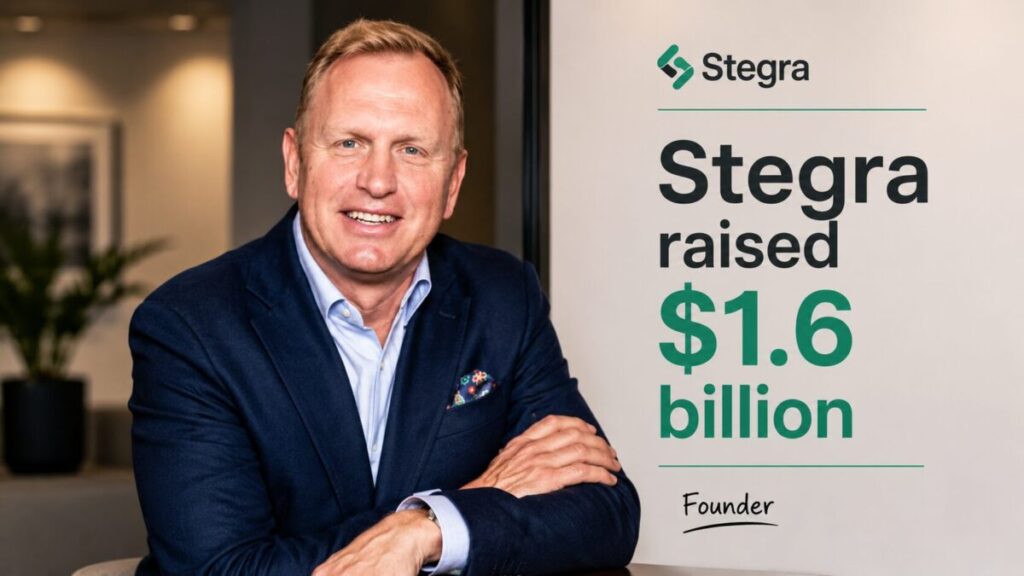
Stegra raised $1.6 billion and pulled itself back from the edge. The Swedish startup, formerly known as H2 Green Steel, officially closed its financing round on June 24, 2026. And if you have been following this story, you know just how much was riding on this moment. Not just for the company. For every person who believes that Europe can actually build clean industry at scale.
Let’s be honest. This one almost didn’t happen.
What Is Stegra and Why Is Everyone Talking About It
Stegra was founded in 2020 with a single, almost stubbornly ambitious goal. Build the world’s first large-scale green steel plant. Not a pilot. Not a demo. A full industrial facility that makes real steel, at real volume, without burning a single kilogram of coal.
The plant is going up in Boden, a city in northern Sweden sitting just south of the Arctic Circle. That location is not a coincidence. The region has access to abundant renewable electricity, which matters enormously for a production process that runs on green hydrogen rather than fossil fuels.
Before Stegra raised $1.6 billion in this round, the company had already secured roughly €6.5 billion across loans, equity, and other instruments. So this is not a seed-stage bet. This is a serious industrial project that ran into serious industrial problems. The difference between the two is important.
Why Stegra Needed $1.6 Billion to Stay Alive
Here is the kicker. This was not a growth round. This was a survival round.
Rising project costs. Evolving scope requirements. Months of slower construction activity while the team scrambled to line up capital. As of last fall, the plant was 60% complete, and it was moving at maybe a quarter of the pace it should have been. Leif Johansson, an adviser to the investor consortium, said it plainly: walking onto that site, as an industrialist, made him feel genuinely sad. A half-finished steel mill crawling along. That is not where anyone wanted to be.
And the Northvolt comparison was everywhere.
Northvolt, another Swedish green industrial flagship also tied to the investment firm Vargas Holding, declared bankruptcy in March 2025 after production delays and mounting debt. The parallels made people nervous. Stegra spent months pushing back against rumors that it was heading the same direction.
In October 2025, the company launched a new financing effort targeting over $1 billion. Hy24, the French hydrogen investor, came in with capital. The Swedish Energy Agency added a grant of around $40 million in November, though that was only about a quarter of what Stegra had applied for.
It helped. But it was not enough.
So Stegra raised $1.6 billion. And that changed the math entirely.
Who Is Funding Stegra: The Wallenberg-Led Investor Group Explained
The round is led by Wallenberg Investments. If you know anything about Swedish industry, you know what that name carries. The Wallenbergs are one of Sweden’s most powerful industrial dynasties, with a history of backing large, complex, long-horizon projects. Their contribution to this round is €250 million.
But the weight here is not just financial. It is reputational. When the Wallenbergs put their name on something, it sends a message to every other investor, every lender, every skeptic watching from the sidelines.
And they did not come alone. Temasek, the Singaporean state-owned sovereign wealth fund, joined the consortium. So did IMAS, the holding company that controls most IKEA stores through the Ingka Group. Existing shareholders Altor, Hy24, and Just Climate all provided follow-on support. Senior and junior lenders participated. And the Stegra lender group gave 100% approval to the new financing.
Think about that number. One hundred percent. On a deal this complex, for a company that had been under a microscope for months. That does not happen by accident.
Håkan Buskhe, head of special investments at Wallenberg Investments and incoming board member, called it an important step in Sweden’s competitiveness and the EU’s security of supply. The governance is also changing. Leif Johansson is moving in as Chair of the Board, with Paal Weberg of Altor also joining. This is a deliberate shift from startup execution mode to industrial-scale delivery.
How Stegra Makes Green Steel Without Burning Coal
Traditional steelmaking is dirty. Full stop. It has relied on coking coal to fuel blast furnaces for over 150 years. The process works well enough, but it pumps out CO2 at a scale that makes it one of the hardest industrial sectors to clean up.
Stegra does it differently. The company produces green hydrogen through electrolysis powered by renewable electricity. That hydrogen is then used to reduce iron ore through a process called direct reduced iron, or DRI. The resulting iron goes into an electric arc furnace to produce steel.
No coal. No fossil fuels. Dramatically lower emissions.
Northern Sweden is built for this approach. Cheap, reliable renewable electricity from hydropower and wind makes green hydrogen economically viable in a way that simply is not true in most other parts of the world. And the EU’s carbon border adjustment mechanism, which came into force earlier this year, now makes it more expensive to import steel from countries without comparable carbon pricing. That works directly in Stegra’s favor.
So when Stegra raised $1.6 billion, it was not just about finishing a building. It was about validating a production model that the entire industry is watching closely.
Where Is Stegra Building Its Green Steel Plant in Sweden
Boden. Norrbotten County. Northern Sweden.
It sounds remote. And it is. But that is the point. The region has the clean power infrastructure this process demands. Hydropower and wind are abundant. The grid is stable. And the area has the industrial logistics needed to support a plant of this scale.
Construction started in 2022. The facility was already 60% complete before activity slowed during the fundraising period. With capital now secured, Stegra is preparing to accelerate construction at the site.
The company also has a commercial foundation taking shape. In January 2026, Stegra signed a multi-year steel supply agreement with thyssenkrupp Materials Processing Europe. Deliveries are expected to begin in 2027, covering high-six-digit tonnage. That is a real customer, with a real contract, for a product that does not fully exist yet.
But that is what conviction looks like.
When Will Stegra’s Steel Plant Actually Start Producing Steel
Straight answer? Not as soon as originally planned.
The company initially targeted late 2026 for completion. That date slipped. Infrastructure complexity, the challenge of scaling green hydrogen production, electricity cost pressures, and the months burned during fundraising all added up.
CEO Henrik Henriksson has been direct about it. From the point the new financing closed, it will take roughly 18 to 24 months to begin actual production. The company has described its project timeline as under review, with updated milestones coming once everything is formally settled.
The financing round closed on June 24, 2026. That is the real start date. Construction ramps back up now. The plant picks up speed. And production, realistically, comes somewhere in 2027 or 2028.
That is not what anyone wanted to hear two years ago. But given where things stood six months ago, this is a comeback.
What This $1.6 Billion Deal Means for Green Steel in Europe
The reality is, this is bigger than Stegra.
Europe has seen multiple planned green steel projects collapse or get quietly shelved over the past two years. High costs. Scaling challenges. A difficult macro environment for long-horizon bets. The green steel pipeline in Europe shrank, and it shrank fast.
Stegra raised $1.6 billion and showed that it does not have to keep shrinking.
Caroline Ashley, executive director of the nonprofit SteelWatch, put it clearly. She called the news a welcome development, and said it signals that the shift toward truly clean steelmaking at scale is actually happening. Not someday. Now.
And there is a structural tailwind that did not exist two years ago. The EU’s carbon border adjustment mechanism has changed the competitive math for domestic low-emissions steel producers. Importing dirty steel into Europe is getting more expensive by design. That benefits Stegra directly.
So yes, this deal matters. For Stegra, obviously. But also for every investor, every policymaker, and every industrial company that has been quietly asking whether green manufacturing can actually work at scale in Europe. The answer, for now, is yes. And it cost $1.6 billion to prove it.
Read about – Startup business models
Read in – Startup Directory
Read about Solo businesses

Hi Friends, This is Swapnil; I love reading and sharing knowledge. Currently working as a content writer at startupsunion.com. You all can hang out with me here.