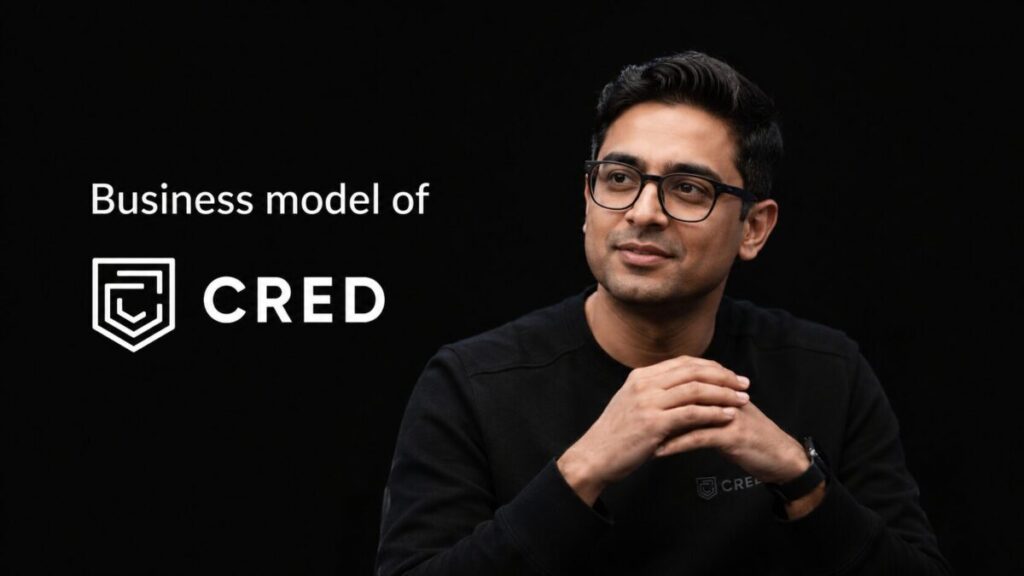
Kunal Shah just walked away from the company he built. Two days ago, he stepped down as CRED’s CEO to run WhatsApp globally, and Meta is putting $900 million into CRED as part of the deal. That’s not a footnote. That changes how you should read everything below.
How CRED Started
Shah had already done this once. He built FreeCharge, sold it to Snapdeal for around $450 million, and could have coasted. He didn’t.
Here’s the problem he saw: India had close to 50 million credit cards floating around, and almost nobody used them with any discipline. Debit cards got more love. Late fees got more attention than good behavior ever did. And Shah’s read on it was simple. Nobody had ever rewarded a person for just paying their bill on time. That’s it. That was the gap.
So CRED launched in 2018 in Bengaluru as a members-only app. You needed a credit score of 750 or above just to get in. Pay your bill through CRED, and you earned CRED coins, which you could cash in for discounts and perks from partner brands. The target wasn’t everyone. It was the top 30 million or so credit card holders in the country, the group responsible for nearly 70% of all credit card spending. Narrow on purpose. Rich on purpose.
Competitive Advantage
- The velvet rope works. Gating membership by credit score filters for low-risk, high-income users. Advertisers and lenders pay extra to reach exactly that crowd.
- Highest revenue per user in the business. Fewer users, but each one worth more. That’s the whole game.
- Data nobody else has. Years of repayment history and spending behavior let CRED underwrite loans with more precision than a lender working off bureau scores alone.
- A real regulatory moat. In March 2026, the RBI authorized CRED to operate as a payment aggregator, on top of registrations it already held with IRDAI, SEBI, and NPCI-linked bodies. That’s not nothing.
- Recall money can’t always buy. Years of strange, loud IPL advertising bought CRED a level of awareness that smaller fintech apps still can’t touch.
- More than one leg to stand on. Lending, insurance, a store, wealth tools. If one line wobbles, the others can carry weight.
Marketing Technique
CRED never advertised like a fintech company. And that was the entire strategy.
IPL sponsorship. Roughly Rs 120 crore committed for a three-year run as an associate sponsor. Expensive. But it bought guaranteed eyeballs during the one window every Indian advertiser fights over.
Celebrity ads that made no logical sense, and that was the point. Rahul Dravid, the calmest cricketer India has ever produced, smashing his own car mirror in a road rage scene. Anil Kapoor and Madhuri Dixit auditioning for the brand itself. People didn’t just watch these ads. They argued about them, screenshotted them, turned them into memes for months.
Gamification. Mystery boxes. Jackpot weeks during IPL season. A once-a-month chore, paying a bill, turned into something closer to a habit you check daily.
Referrals. Members could invite people in, but new sign-ups still had to clear the credit score bar. Growth without diluting the exclusivity. That’s a hard needle to thread, and CRED threaded it.
Influencer and content plays. Stunts like going private on Instagram and letting creators speculate why. A long-running YouTube series that gave the brand a thinking-out-loud, founder-led personality alongside the spectacle.
Brand tie-ups. Partnerships with names like Taj Hotels, plus a marketplace of D2C brands inside the app itself. CRED basically became a sampling channel for newer consumer brands chasing affluent buyers.
How CRED Makes Money
- Lending. CRED Cash and CRED Mint bring in interest spread and referral fees through bank and NBFC partners. The lending book hit roughly Rs 22,000 crore in managed AUM in FY25.
- Insurance. CRED Garage earns commissions from insurer partners.
- Payments. Transaction fees off UPI and BBPS rails, with more room now that CRED holds a payment aggregator license. Fees here are capped around 1.1% by regulation, so don’t expect this to be a windfall on its own.
- The CRED Store. Commission and placement fees from brands trying to reach CRED’s wealthier member base.
- Advertising. Brands pay to show up in front of a screened, high-income audience.
- Newer fee products. CRED Money, card and credit score tools, RentPay, CRED Cash+. Small additions individually, but they add up across a user base that’s already spending heavily.
Market Share of CRED
Let’s be honest about the numbers here, because they tell two different stories depending on which one you pick.
CRED has around 1.7 crore monthly transacting users. Every single one screened for a high credit score. That’s small next to PhonePe or Google Pay. NPCI data from May 2026 ranked CRED eighth in UPI transaction volume, with about 0.8% share, while PhonePe sat around 45 to 48% and Google Pay near 35%. On that scoreboard, CRED barely registers.
But that’s the wrong scoreboard. In its actual category, credit card bill payments, CRED reportedly handles over 40% of the country’s volume by value. That’s not a niche player. That’s the category leader, full stop. In FY25, the app processed roughly Rs 8.5 lakh crore in total payment value, up 23% from the year before.
Business Model Canvas of CRED
- Customer segments: affluent, creditworthy individuals (750+ score); D2C and retail brands; banks, NBFCs, and insurers looking for distribution.
- Value proposition: rewards for paying your bills like an adult, one app for managing multiple cards, curated access to credit and insurance, and the status that comes with being let into an exclusive club.
- Channels: the app itself, IPL and TV campaigns, social and influencer content, referrals.
- Customer relationships: gamified engagement through coins and surprise rewards, an exclusivity-driven sense of community, in-app support.
- Revenue streams: lending interest and referral fees, insurance commissions, payment processing fees, advertising, store commissions.
- Key resources: proprietary credit and spending data, brand equity, regulatory licenses, the platform itself.
- Key activities: credit underwriting, product development, brand marketing, partner management.
- Key partnerships: card-issuing banks, NBFCs, insurers, Visa and Mastercard, the IPL, D2C brands, and now Meta.
- Cost structure: marketing and celebrity ad spend, member rewards, engineering, compliance, ESOP and people costs.
Conclusion: Is CRED a Viable Business?
Here’s the kicker. The fundamentals actually got better this year. FY25 operating revenue grew 16% to Rs 2,735 crore. Operating losses fell 51%, down to just Rs 298 crore. Gross margins sit around 70%. Management is talking about full profitability in FY26, and for once, that doesn’t sound like wishful founder talk.
But the road here wasn’t smooth. CRED’s valuation got cut nearly in half, from $6.4 billion in 2022 down to $3.64 billion in a May 2025 down round, before Meta’s investment pulled it back up to around $4.5 billion. The company is still losing money overall, around Rs 1,457 crore in FY25. And now it’s doing all of this without the founder who built it, with interim CEO Miten Sampat holding the wheel while CRED reportedly works toward an IPO.
So is the bet still good? The idea that a smaller, richer, deeply monetized user base beats chasing everyone in sight, that idea is looking more credible every quarter. CRED owns its category. Losses are shrinking fast. Revenue lines are multiplying.
But this is a company mid-transition, not a finished one. It’s lonely at the top of a category nobody else has cracked. It’s hard to lose your founder mid-story. And it’s even harder to prove an entire business model right in front of investors who already watched the valuation get cut once. Cautiously viable is the honest answer. The next 12 to 18 months will decide which way it tips.
Is CRED Worth It for You? Here’s What the Ratings, Reddit, and the Latest News
Read about – Startup business models
Read in – Startup Directory
Read about Solo businesses

Hi Friends, This is Swapnil; I love reading and sharing knowledge. Currently working as a content writer at startupsunion.com. You all can hang out with me here.