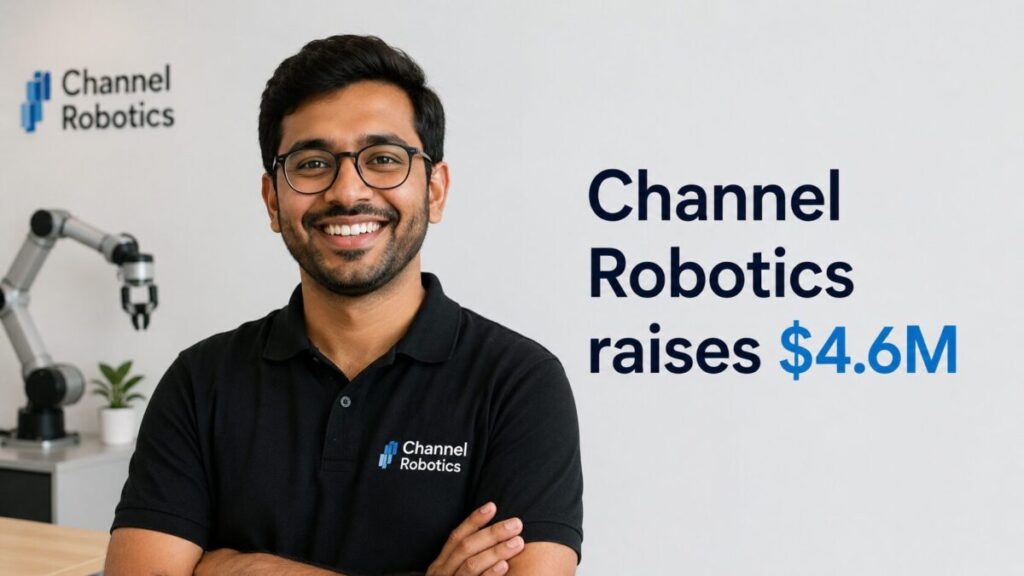
Surgical robotics has always been a game for the wealthy. Massive machines. Multi-million dollar price tags. And hospital systems with deep enough pockets to absorb the hit. But a San Diego startup is quietly rewriting those rules. On June 18, 2026, Channel Robotics announced it has raised a total of $4.6 million to develop a handheld, AI-powered endoscopic robotic platform. And the medical community is paying close attention.
What Is Channel Robotics and What Does It Do?
Channel Robotics is a San Diego-based medical technology company developing a next-generation endoscopic robotic platform designed to enhance physician dexterity and expand access to advanced minimally invasive procedures. Founded by physician-scientist Dr. Philip Weissbrod and roboticist Dr. Michael Yip, the company is focused on creating practical, scalable robotic solutions that integrate into existing clinical workflows.
The idea was born out of a simple but powerful frustration. The concept was developed more than a decade ago, when Weissbrod and Yip began exploring new ways to make robotic surgery more affordable and accessible. “We developed the idea of creating robotic instruments rather than creating a larger robotic system because we recognized that cost was a major barrier for robotic surgical access,” Weissbrod explained. “By utilizing the mechanics and optics of an endoscope and focusing on putting the robotic technology into the instruments, we could cut costs significantly.”
That thinking drove years of research. The company is backed by over seven years of NIH-funded research and a team of experts in endoscopy, AI, and surgical robotics. And now, with fresh capital in hand, it is making the move from lab bench to clinical reality.
Channel Robotics Raises $4.6M — Who Are the Investors?
Channel Robotics closed a $2.5 million Seed+ financing round led by True Ventures, a leading early-stage venture capital firm known for backing transformative technology companies. This brings the company’s total capital raised to $4.6 million. The Seed+ round follows the close of the company’s $2.1 million Seed round, which included participation from Defined Ventures and Old Line Capital Partners.
True Ventures is not a passive check-writer here. Rohit Sharma, partner at True Ventures, said: “Mike and Philip are a rare combination of deep clinical experience and expertise combined with robotics, which enables practical solutions for an unprecedented number of clinics and physicians. Their innovation solves serious robotics challenges in service of human health, and we are honored to be a part of their journey.”
The reality is, the investor syndicate around Channel Robotics is not random. Each firm brings specific healthcare and deep tech expertise. The kind of strategic value that goes well beyond the dollar amount on the term sheet.
How Does Channel Robotics’ Handheld Endoscopic Robot Work?
Here is the kicker. Channel Robotics is not building another giant robot.
Channel’s technology combines robotic instrumentation, intuitive control systems, and artificial intelligence to help physicians perform more precise minimally invasive procedures. The company believes its approach can create a new category within endoscopic robotics by integrating into existing clinical workflows rather than requiring hospitals to adopt large standalone robotic platforms.
The platform is designed to deliver robotic-level dexterity through existing flexible endoscopes. No new infrastructure. No dedicated operating theatre. No six-month onboarding process for the surgical team. Think of it this way: instead of wheeling in a room-sized system, a physician picks up a handheld device and immediately gains robotic-grade precision using equipment already sitting in the hospital.
And the technology density is remarkable. “Per unit volume, Channel Robotics packs more state-of-the-art AI and robotics technology into a surgeon’s hand than any other system today,” Weissbrod said. That is a bold claim in an industry dominated by players with billions in R&D budgets. But the years of NIH research and a patented platform suggest this is not just founder enthusiasm talking.
Why Doctors Need Cheaper and Smaller Robotic Surgery Tools
Let’s be honest. The current surgical robotics market is not built for accessibility.
Traditional surgical robotics systems often require significant capital investment, dedicated operating room infrastructure, and specialized training. Channel is targeting a more flexible model designed to extend robotic capabilities into a broader range of care settings, including hospitals, ambulatory surgery centers, and community practice settings.
The numbers tell the real story. The global surgical robotics market was valued at $12.49 billion in 2025 and is projected to grow to approximately $50.29 billion by 2035, expanding at a CAGR of nearly 15% from 2026 to 2035. North America dominates with a 51% market share in 2025. But access to these tools remains deeply unequal. Community hospitals and ambulatory surgery centers are largely locked out of the technology driving those numbers.
Weissbrod has spoken about a future where a patient in a rural community has access to the same level of precision care as one at a major urban medical center. Without costly travel. Without waiting lists tied to geography. This shift from a centralized, capital-intensive model to a distributed, accessible one could redefine not just the operating room but the very reach of advanced medical care.
So, Channel Robotics is not just competing on performance. It is making a structural argument. The current model is broken for most of the world. And a handheld AI-powered robotic tool is how you fix it.
How Channel Robotics Plans to Use the $4.6M Funding
The $4.6M is not going into a war chest. Every dollar has a specific job.
The new funding will support continued refinement and validation of the company’s prototype, expansion of engineering and product development, preparation for an FDA submission targeted for 2027, advancement of manufacturing and quality systems, and commercial launch planning following regulatory clearance.
And the company is tracking well. Over the past year, Channel Robotics moved from early prototypes to late prototypes to design stabilization. A major mechanical architecture update was completed. The KOL bench was strengthened. That is real, measurable progress.
Philip Weissbrod, co-founder and CEO, put it plainly: “With the support of True Ventures and our existing investors, we are well-positioned to accelerate development and bring this technology to clinicians and patients. We believe the future of endoscopic robotics will be defined by solutions that are more accessible, easier to adopt, and capable of reaching far more patients than traditional robotic systems.”
Co-founder Michael Yip added: “Our mission is to democratize access to advanced endoscopic robotics. This financing enables us to continue building a platform that can bring sophisticated robotic capabilities to physicians in a practical, scalable, and cost-effective way.”
Two founders. One clear mission. No ambiguity about where this is headed.
Channel Robotics FDA Approval: What’s the Timeline?
Channel Robotics is targeting an FDA submission in 2027, with commercial launch planning to follow regulatory clearance. That is a realistic and disciplined timeline for a company at this stage.
But let’s not sugarcoat it. The road from a funded prototype to a widely adopted medical device is long. Regulatory clearance, clinical validation, physician training, and hospital procurement cycles all sit between Channel Robotics and broad commercial deployment. None of those are small hurdles. Any founder who has been through a medical device clearance process will tell you the same thing.
The structural advantage here, though, is real. Because Channel’s platform works with existing flexible endoscopes already in hospitals, the adoption friction is dramatically lower than introducing an entirely new robotic system. Hospitals do not need to build new rooms. They do not need to retrain entire departments. That alone could compress commercialization timelines in ways that standard surgical robot companies simply cannot replicate.
That matters more than most people outside the medtech world realize.
Can Channel Robotics Compete With Big Surgical Robot Companies?
Channel Robotics is going up against players like Intuitive Surgical, Brainlab, and PROCEPT BioRobotics. These are multi-billion dollar organizations with entrenched hospital relationships, massive sales forces, and decades of brand equity.
So where does a $4.6M seed-stage startup find its edge?
Positioning. Channel Robotics is not trying to beat Intuitive Surgical at its own game. It is going where they cannot easily follow. Community hospitals. Ambulatory surgery centers. Under-resourced care settings where a multi-million dollar robotic system will simply never show up. By eliminating the need for large, capital-intensive robotic systems, Channel aims to expand access to advanced endoscopic procedures across exactly these settings.
And the market is expanding fast enough to support multiple winners. The global surgical robot systems market was estimated at $11.48 billion in 2024 and is projected to reach $23.13 billion by 2030, growing at a CAGR of 12.4%. A company that captures even a meaningful slice of the underserved care setting segment could represent a very significant business.
The reality is, Channel Robotics does not need to dethrone Intuitive Surgical to win. It just needs to become the default choice for the thousands of hospitals and surgery centers that cannot afford and will never buy the status quo. That is a big enough market on its own.
The Bottom Line
Channel Robotics raising $4.6M is not just a funding story.
It is a signal that the next frontier of surgical robotics will not be built by making existing machines bigger. It will be built by making them smaller, smarter, and accessible to the physicians and patients who need them most. With a patented AI-enabled platform, a credible founding team backed by seven years of NIH research, True Ventures leading the charge, and a clear FDA roadmap targeting 2027, this is a company worth watching closely.
The big robots had their moment. The hand-held revolution might be next.
Read about – Startup business models
Read in – Startup Directory
Read about Solo businesses

Hi Friends, This is Swapnil; I love reading and sharing knowledge. Currently working as a content writer at startupsunion.com. You all can hang out with me here.