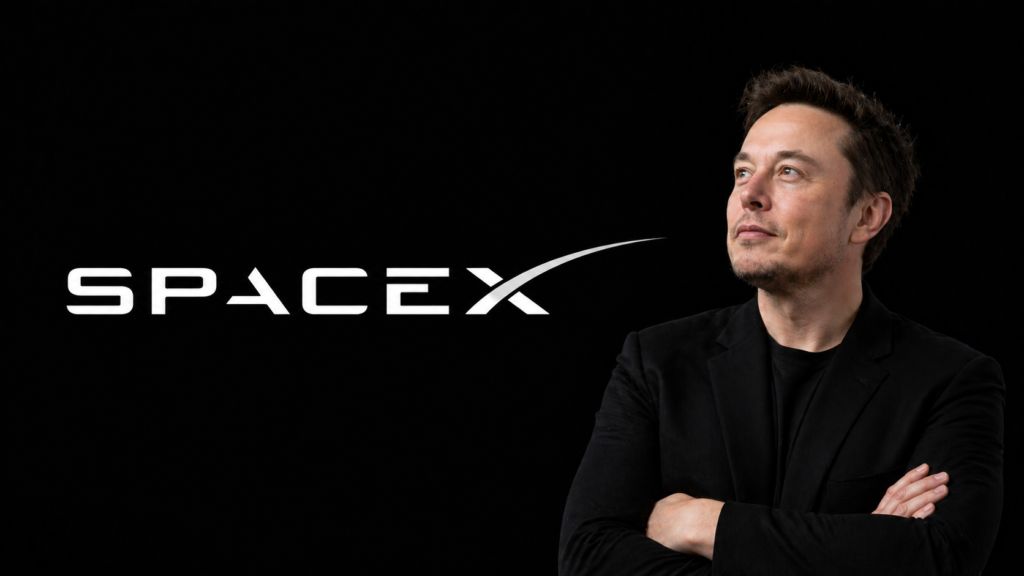
SpaceX: Revolutionizing Space Access and Commerce
How It Started
After being ousted as CEO of PayPal in late 2000, Elon Musk became interested in space exploration when he discovered that NASA had no concrete plan for a human mission to Mars. Musk and aerospace engineer Mike Griffin traveled to Russia to purchase a refurbished Dnepr rocket but returned empty-handed when they failed to find one at an affordable price. On his flight back, Musk realized he could start a space exploration company himself and build affordable rockets.
In early 2002, Musk met with aerospace engineers at a hotel in Los Angeles International Airport to discuss founding a space launch company and invited five people to be early employees. The core problem SpaceX aimed to solve was simple yet ambitious: decrease the cost and improve the reliability of access to space, ultimately by a factor of ten. Musk provided half of his $180 million from PayPal stocks to the newly founded company.
The target audience included both government agencies like NASA and commercial satellite operators seeking affordable launch services. Musk sought out NASA as a stable customer to fund early rocket development.
Competitive Advantage
SpaceX maintains several critical advantages over traditional aerospace competitors:
- Reusable Rocket Technology: Since its founding in 2002, SpaceX has made numerous advances in reusable launch vehicles.
- Cost Leadership: The Falcon 1 rocket was vastly cheaper to build and operate than competitors from companies like Lockheed Martin and Boeing.
- Vertical Integration: SpaceX developed the Merlin engine, a cheaper alternative to those used by other companies.
- Market Dominance: As of 2026, SpaceX conducts more orbital launches annually than any other launch provider.
- First-Mover in Commercial Spaceflight: SpaceX was the first to launch a crewed spacecraft and dock it with the International Space Station.
Marketing Techniques
Government Contracts: SpaceX secured major NASA contracts, providing stable revenue and credibility. SpaceX, NASA, and the United States Armed Forces work closely together through governmental contracts.
Starlink Expansion: SpaceX’s Starlink satellite internet service reportedly has a 97% market share and is driving the majority of what Reuters estimated to be about $16 billion in revenue in 2025.
Public Visibility: After spending 18 months developing a spacecraft, SpaceX unveiled the Dragon craft in 2006, named after “Puff, the Magic Dragon” because critics believed his spaceflight aims were impossible.
Demonstration Missions: Launching high-profile missions and achieving historical milestones generates organic media coverage and brand prestige.
How SpaceX Makes Money
SpaceX generates revenue through multiple streams. The company sells tickets to space on its launches and operates Starlink, its global satellite internet service. Additionally, SpaceX works with NASA and the United States Armed Forces through governmental contracts. By May 2012, SpaceX had contracts for 40 launch missions with down payments at contract signing and progress payments as launch vehicle components were built.
Market Share
| Service Category | Market Share / Position |
| Orbital Launch Services | Leading provider globally, more launches than all competitors combined |
| Satellite Internet (Starlink) | 97% market share |
| Crewed Commercial Spaceflight | Only active provider as of 2026 |
| Company Valuation | $800 billion (most valuable private company) |
Business Model Canvas of SpaceX
Key Partners: NASA, U.S. Department of Defense, satellite operators, commercial customers
Key Activities: Rocket design and manufacturing, launch operations, satellite constellation deployment, crewed spaceflight services
Key Resources: Proprietary rocket and reusable launch vehicle technology, manufacturing facilities, human capital, government contracts
Value Proposition: Dramatically reduced launch costs, reliability, rapid launch frequency, global connectivity via Starlink, crewed spaceflight access
Customer Segments: Government agencies (NASA, DoD), commercial satellite companies, telecommunications providers, space tourists, emerging space economy participants
Channels: Direct sales to government agencies, commercial contracts, Starlink direct-to-consumer services, partnership agreements
Customer Relationships: Long-term government contracts, subscription-based Starlink service, exclusive crewed spaceflight partnerships
Revenue Streams: Launch services, Starlink subscriptions, government contracts, space tourism, component manufacturing
Cost Structure: Manufacturing infrastructure, research and development, personnel, facility operations, vehicle production
Conclusion: Is It a Viable Business?
SpaceX has unquestionably proven itself as a highly viable and exceptionally profitable business. A space industry newspaper estimated that SpaceX had a revenue of over $10 billion in 2024, while a 2025 offer to buy internal shares valued SpaceX at $800 billion, making it the world’s most valuable private company. The company has successfully disrupted an entrenched industry, demonstrating that innovative engineering combined with cost reduction can create enormous value.
SpaceX is not publicly traded but is expected to have an initial public offering in 2026, signaling investor confidence in its financial health and future growth prospects. The combination of government contracts providing stable revenue, Starlink’s explosive growth in satellite internet, and leadership in commercial spaceflight creates multiple revenue streams that insulate the business from single-sector volatility. SpaceX’s business model is not merely viable – it is transformative, fundamentally reshaping the aerospace industry while building a platform for humanity’s future in space.

Hi Friends, This is Swapnil; I love reading and sharing knowledge. Currently working as a content writer at startupsunion.com. You all can hang out with me here.