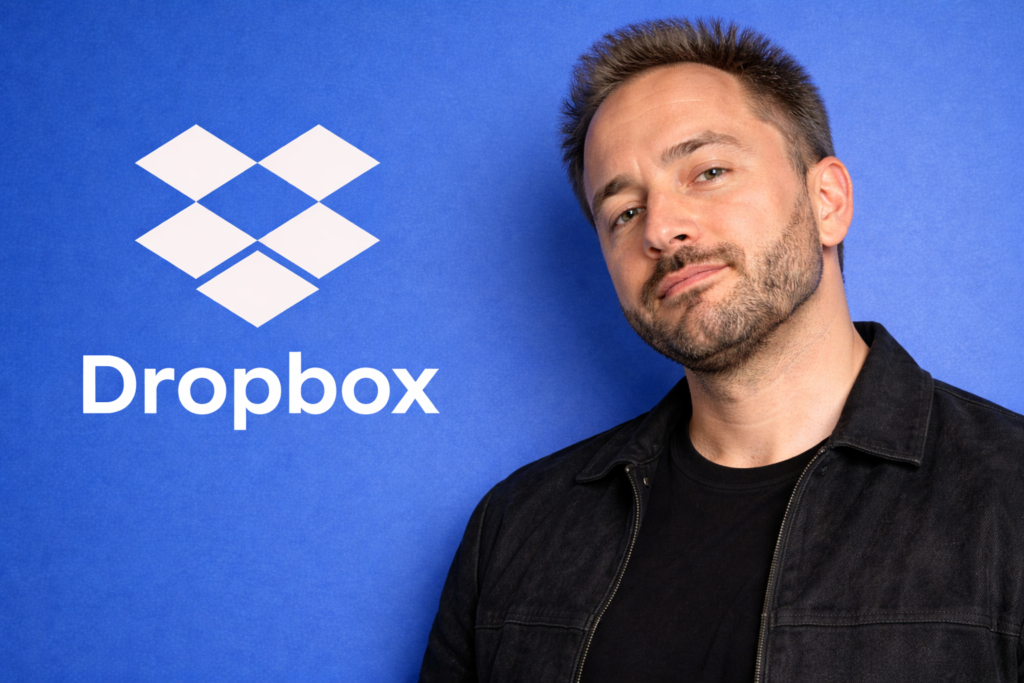
Dropbox: From Forgotten USB Drive to Cloud Storage Giant
How It Started
Dropbox began as a solution to a common problem: forgetting one’s USB drive. Founder Drew Houston experienced this frustration on a bus ride, which led to the creation of Dropbox’s Minimum Viable Product — a basic version of the service that simply synced files online across all devices. Available options like email attachments had limitations in file size, existing methods often resulted in lost or corrupted data, files stored on a USB were not accessible elsewhere, and sharing files among multiple users was inefficient.
Dropbox was founded in 2007 by MIT students Drew Houston and Arash Ferdowsi, with the target audience being professionals and individual users who needed seamless file access across multiple devices. Houston focused on creating a user-friendly, efficient, and scalable service that allowed users to store and access files seamlessly across multiple devices.
Competitive Advantage
Dropbox established several key competitive advantages in the crowded cloud storage market:
- Technical superiority: Drew and Arash developed an algorithm that took advantage of the fact that there are only so many unique files, storing shared files once rather than multiple times, making their storage costs one-eleventh of less efficient solutions.
- Platform neutrality: Dropbox concentrated on platform-agnostic features and user accessibility, refining a single powerful solution instead of diverging into unrelated services, ensuring it remained relevant in a field crowded by tech titans.
- User experience focus: Dropbox solved a very basic problem and thoroughly understood its users’ needs, addressing the issue by making cloud storage a simple, secure, and hassle-free experience.
- Product stability: Dropbox disrupted the market as soon as it launched, with several applications enabling cloud storage but none as stable, seamless, and robust.
Marketing Techniques
Demo Video Strategy: Houston created a simple video demonstrating the product and published it on Hacker News in April 2007 with the title “My YC app: Dropbox – Throw away your USB drive.” The beta waiting list jumped from 5,000 to 75,000 overnight, solving the early traction problem Dropbox had been experiencing.
Referral Program: Dropbox offered additional free storage space to both the referrer and the referred, creating a win-win situation that encouraged users to spread the word. The incentive-based invite system created a viral effect, with users motivated to share because they benefited directly, playing a significant role in the company’s rapid growth.
Content Marketing: A subsequent video took a more marketing-focused approach aimed at a much wider audience, describing the Dropbox solution in a straightforward and non-technical way through a story about a man who travels to Africa.
How Dropbox Makes Money
Dropbox uses a freemium business model, offering users a free account with a set storage size, with paid subscriptions available that provide more capacity and additional features. Dropbox leverages its $2.6B ARR scale and platform integrations — such as Dropbox Sign — to deepen enterprise penetration. Dropbox evolved its business model from a consumer-focused freemium service to include robust enterprise solutions like Dropbox for Business and Dropbox Enterprise. Dropbox acquired HelloSign, an e-signature platform, in 2019 and DocSend, a secure document-sharing company, in 2021, diversifying its revenue streams beyond storage.
Market Share
| Cloud Storage Provider | Market Position | Key Metrics |
|---|---|---|
| Dropbox | Leading independent cloud storage provider | 700+ million users, $2.6B ARR, 4B daily uploads |
| Google Drive | Market leader (ecosystem integration) | 1.8B users via Google accounts |
| Microsoft OneDrive | Strong enterprise presence | Bundled with Microsoft 365 |
| Apple iCloud | iOS/Mac ecosystem focus | Integrated with Apple devices |
Business Model Canvas of Dropbox
| Key Partnerships | Key Activities | Value Proposition | Customer Relationships | Customer Segments |
|---|---|---|---|---|
| Microsoft, Apple, Google integrations; HelloSign and DocSend acquisitions | Cloud infrastructure; product development; enterprise support; AI/ML integration | Seamless file sync, secure storage, collaboration tools, AI-powered search, e-signature, ease of use | Freemium engagement, dedicated enterprise support, community forums | Individual users, small businesses, enterprises, creative professionals |
| Resources and Channels | ||||
| Key Resources: Cloud infrastructure, engineering talent, AI/ML capabilities, platform integrations | Distribution Channels: Direct website, app stores, enterprise sales, partnerships, referral programme | |||
| Revenue and Costs | ||||
| Revenue Streams: Freemium subscriptions, enterprise plans, Dropbox Sign, integrated solutions | Cost Structure: Infrastructure, R&D, sales and marketing, data centre operations, employee costs | |||
Conclusion: Is It a Viable Business?
Dropbox remains a viable and formidable business, though it faces notable headwinds. Dropbox boasts over 700 million users, generates $2 billion in annual revenue, and handles over 4 billion daily uploads, with 1.5 trillion files stored worldwide. However, the company faces commoditisation of cloud storage and fierce competition from hyperscalers and collaboration suites, which continues to pressure pricing and margins while forcing strategic pivots.
As hybrid work solidifies, Dropbox positions itself as connective tissue for digital workflows, offering a differentiated blend of file management, e-signature, and AI-driven productivity tools. Dropbox is refocusing on AI-driven initiatives, notably its Dash AI search product, to capture new market opportunities and enhance profitability. The company’s strategic pivot toward enterprise solutions and AI-powered features positions it favourably for sustained growth despite intense competition from tech giants. With strong brand recognition, a loyal user base, and diversified revenue streams, Dropbox has demonstrated both resilience and adaptability in a rapidly evolving market.

Hi Friends, This is Swapnil; I love reading and sharing knowledge. Currently working as a content writer at startupsunion.com. You all can hang out with me here.