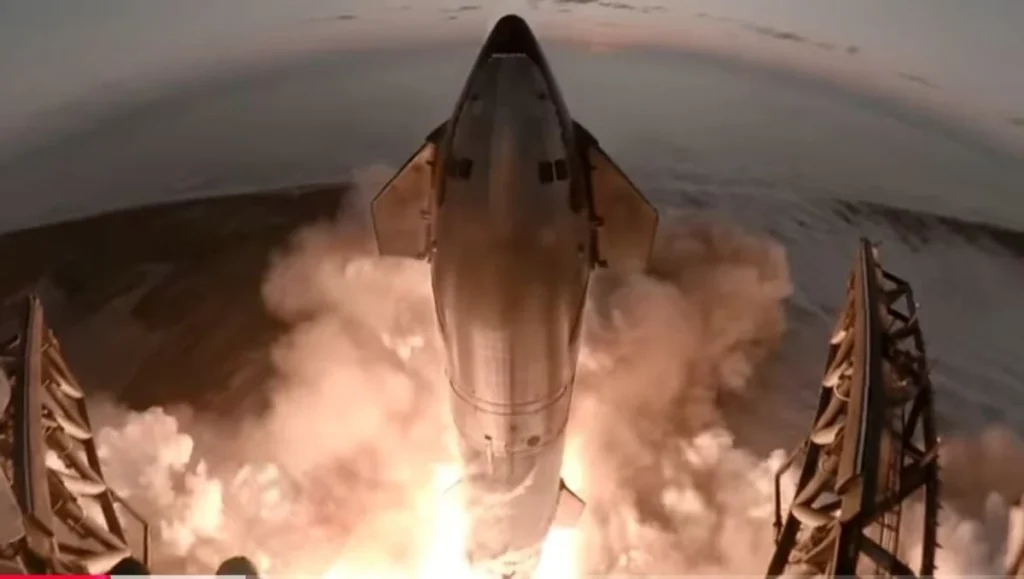
How SpaceX Started
May 6, 2002. Elon Musk walked into a 3,000-square-foot warehouse in El Segundo, California, with approximately $100 million of his own money from the PayPal sale and one obsessive idea: make rockets cheap enough that Mars colonization actually becomes possible.
Here’s the real backstory: In late 2001, Musk tried to buy refurbished Soviet ICBMs (intercontinental ballistic missiles) to launch a Mars Oasis project—literally growing a plant in Martian soil as a publicity stunt. He flew to Moscow multiple times. The Russians wanted $8 million per missile, and the price kept climbing. Musk flew home thinking, “Why am I paying this much? I’m going to build it myself.”
By early 2002, he started recruiting aerospace engineers at LAX hotels. Tom Mueller (propulsion genius) and Chris Thompson (structures expert) said yes. By August 2002, Gwynne Shotwell had joined as head of sales. The first Falcon 1 launched from the Omelek atoll in the Marshall Islands on March 24, 2006. Three failed launches preceded that success.
But here’s the kicker: July 4, 2009. Falcon 1 finally reached orbit. First privately developed liquid-fueled rocket to do it. The aerospace industry basically said, “Wait, this kid actually did it?”. Fast-forward to today: SpaceX launches more rockets than every other company and country combined. Starlink serves millions globally. They’re testing Starship for Mars missions. Worth $180+ billion. Elon Musk’s SpaceX became the dominant aerospace company on Earth.
The Problem, Solution & Target Audience
The Problem: Launch costs were absolutely ridiculous. Getting anything to space cost $10,000+ per kilogram—purely because the aerospace industry had zero competition and governments had unlimited budgets. Rockets were one-time use. You’d spend $1 billion building something, fly it once, and throw it away. That economics made Mars impossible. Made satellite internet impossible. Made space exploration a game only governments could play.
The Solution: SpaceX did three things simultaneously. First: make rockets reusable. The Falcon 9 booster lands itself, refuels, and launches again. Revolutionary. Cost per launch dropped from $65 million to $15 million. Then went lower. Second: vertical integration. SpaceX manufactures 70% of their own components instead of outsourcing to contractors charging 10X markups. Third: fail fast. Build, test, crash, learn, and rebuild in weeks. Traditional aerospace takes years for one iteration.
Target Audience:
- NASA needing ISS resupply (paying billions)
- U.S. Space Force needing guaranteed national security launches
- Satellite companies needing affordable rides to orbit
- Starlink customers wanting global broadband
- Future Mars colonists (long-term vision)
- Anyone wanting space access without financial ruin
Competitive Advantage MOAT (Unique Strengths)
• Proven Reusability at Insane Scale: 607 Falcon 9 and Falcon Heavy launches (as of February 2, 2026). 604 full successes. One partial. One failure. Competitors still can’t land and reuse boosters reliably. SpaceX owns this market completely.
• Vertical Integration is Unbeatable: SpaceX makes their own Merlin and Raptor engines, avionics, tanks, and structures. When competitors need a part, they wait 18 months and pay a 10X markup. SpaceX makes it in-house in weeks. That speed multiplies over years into absolute dominance.
• Starlink Ecosystem Lock-In: 6+ million subscribers paying $120/month for satellite internet. That’s recurring revenue funding everything else. Competitors (Amazon Kuiper, OneWeb) are years behind or bankrupt. Network effects make this unbeatable.
• First-Mover Plus Massive Lead: Been doing this since 2002. Every competitor is 10-15 years behind technologically. By the time they catch up, SpaceX is already on Mars.
• Government Relationships = Strategic Infrastructure: NASA, Space Force, and allied nations all depend on SpaceX. That’s not just a business advantage—that’s structural geopolitical power. Governments won’t switch from proven reliability to experimental competitors.
How Does SpaceX Make Money?
SpaceX operates a genuinely brilliant multi-revenue model:
Government Contracts: NASA pays $2.6+ billion annually for ISS resupply and crew transport. The U.S. Space Force pays billions for National Security Space Launch (NSSL). Recurring, guaranteed revenue.
Commercial Launches: Satellite operators pay $15+ million per launch. With SpaceX processing 5-10X more launches than competitors annually, volume is absurd. Margins are probably 60%+.
Starlink Satellite Internet: 6+ million subscribers at $120/month = $8.6+ billion annual recurring revenue (annualized). Margins north of 70%. This single business funds everything.
Future Starship: Long-term, point-to-point Earth transport and Mars colonization will generate enormous revenue. But that’s 5-10 years out.
Market Share of SpaceX—
Here’s where it gets genuinely insane:
• Launch Market: SpaceX handles 50%+ of all orbital launches globally right now. Competitors combined handle 50%. SpaceX is literally winning the entire category.
• Starlink Market: Global satellite internet is a $300+ billion TAM. Starlink dominates with 6+ million subscribers, growing. Competitors are stuck in development hell or bankruptcy.
• Aerospace Revenue: SpaceX 2024 revenue estimated at low tens of billions (mostly Starlink). Growing 50%+ annually. For comparison, Boeing’s entire space division does ~$2.5 billion. SpaceX will be 4-5x larger.
• Government Contracts: Locked in with NASA and Space Force through 2030+. Those contracts are multi-billion and exclusive. No competitor has equal access.
• Valuation Signal: $180 billion (February 2026). The SpaceX IPO hasn’t happened yet, but when it does, it’ll be the biggest aerospace stock IPO ever. Musk hasn’t committed to a timeline.
• Space Industry Dominance: SpaceX owns commercial spaceflight completely. They’re the category leader. When people think “commercial space,” they think SpaceX.
The Real Story
SpaceX didn’t just build a business. They fundamentally restructured how humanity accesses space. Before SpaceX, launch costs were fixed, astronomical, and permanent. After SpaceX, they’re plummeting 90% and getting cheaper annually.
Before SpaceX, Mars colonization was pure fantasy. After SpaceX, it’s a stated objective with Starship in testing. Before SpaceX, global satellite internet at consumer scale was impossible. After SpaceX, Starlink serves millions.
Elon Musk’s SpaceX went from a 3,000-square-foot warehouse with fewer than a dozen employees to the dominant aerospace company on the planet. They proved that vertical integration, iterative development, and radical cost-cutting work even in the hardest industry. When SpaceX eventually IPOs, investors will fight for shares. Because SpaceX isn’t just a launch provider—they’re making humanity multiplanetary. That’s trillion-dollar potential hiding in plain sight.
Read More- SpaceX to Acquire EchoStar

Hi Friends, This is Swapnil; I love reading and sharing knowledge. Currently working as a content writer at startupsunion.com. You all can hang out with me here.