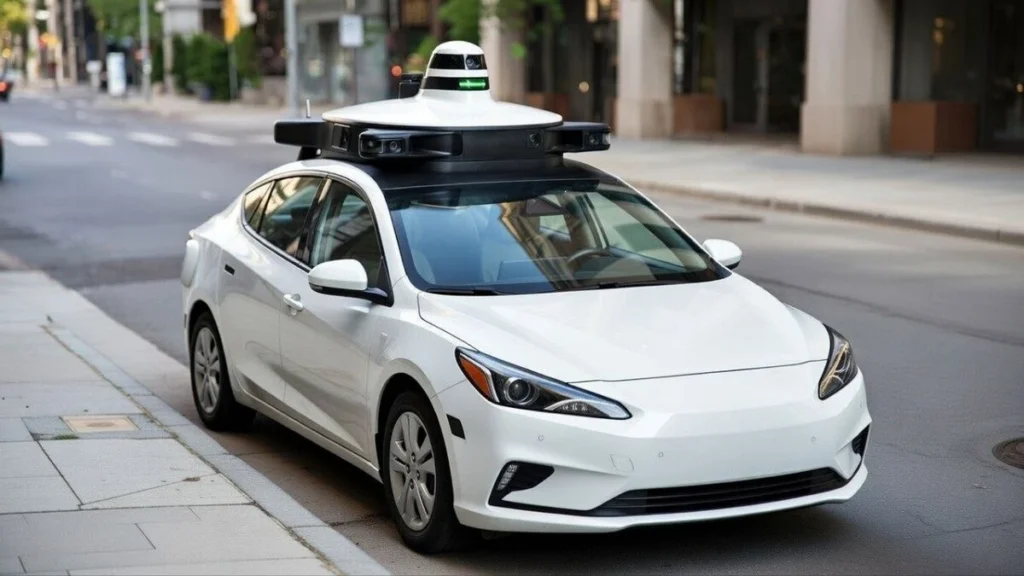
On January 31, 2026, Alphabet’s autonomous driving subsidiary Waymo announced it’s raising $16 billion at a $110 billion valuation. That’s not just a massive round—it’s more than doubling the company’s valuation from its October 2024 Series C at $45 billion. But here’s what actually matters: Waymo just hit 20 million fully autonomous, paid robotaxi trips and is operating more than 2,000 Waymo self-driving vehicles across five U.S. cities. This isn’t theoretical anymore. The robotaxi business is actually printing money. Let’s break down why investors are going all-in.
Why It Is Raising $16B—Main Reason
Here’s why Waymo is capturing this funding:
• The Robotaxi Market is Exploding Right Now: Waymo operates the only fully autonomous, driverless robotaxi service in the U.S. with no safety drivers. They’re processing 450,000 paid robotaxi trips per week. That’s real revenue from real customers choosing the Waymo self-driving car. The demand for autonomous mobility is here-not coming, but HERE.
• $350M+ Annual Recurring Revenue (ARR) Proves the Model: Waymo’s self-driving taxi operations generated over $350 million in ARR. That’s not startup money. That’s sustainable, growing, predictable revenue. Investors love that signal.
• Waymo Car Expansion is Capital-Intensive: Waymo operates across San Francisco, Los Angeles, Phoenix, Miami, and other cities. Every new Waymo car costs serious money to manufacture, integrate, and deploy. They’re targeting 1 million paid robotaxi rides per week by the end of 2026. That requires capital.
• The Competitive Pressure is Real: Tesla recently began piloting fully unsupervised robotaxi rides in Austin. The race for market share in autonomous vehicles is accelerating. Waymo needs capital to stay ahead and scale faster than competitors.
• Top-Tier Investors Are Fighting to Get In: The round is three times oversubscribed. That means more investors wanted in than available slots. Alphabet is putting in $13 billion. Sequoia Capital, DST Global, Dragoneer, Mubadala, and Andreessen Horowitz are all participating. That’s maximum validation.
Where Will Waymo Use This Fund
Waymo announced the $16 billion will go to five strategic areas:
• Expanding Waymo Vehicle Fleet: Manufacturing and deploying more Waymo self-driving cars across existing cities and new markets. Going from 2,000+ vehicles to 5,000+ requires serious capital for vehicle production, sensors, and software integration.
• Geographic Expansion: Launching the Waymo self-driving taxi service in new cities beyond San Francisco, Los Angeles, Phoenix, and Miami. Expansion requires local infrastructure, regulatory work, and customer acquisition in each market.
• Technology Development: Improving the Waymo self-driving car’s autonomous capabilities—sensor fusion, AI models, real-time decision-making, and safety systems. The self-driving taxi only works if the technology is bulletproof.
• Data Center & Computing Infrastructure: Training AI models that power the Waymo car requires enormous compute. Processing 20+ million trips’ worth of data to improve safety and efficiency is computationally expensive.
• Sales & Operations Teams: Hiring customer service, operations, maintenance, and support staff. As the Waymo robotaxi fleet expands, you need people managing rides, maintaining vehicles, and supporting customers.
The strategy is crystal clear: Waymo is moving from proof-of-concept to mass-market deployment. They’ve proven the Waymo self-driving taxi works. They’ve proven customers will pay for it. Now they’re betting billions that becoming the dominant robotaxi operator will generate years of high-margin recurring revenue.
The Waymo car price doesn’t matter anymore. What matters is that people are choosing to ride in a Waymo self-driving car every single day. That’s the network effect. The robotaxi becomes essential. The self-driving taxi becomes the default transportation. That’s trillion-dollar potential. Investors see it. That’s why they’re funding it.
Source: TechCrunch
Read more- Business Model of Waymo

Hi Friends, This is Swapnil; I love reading and sharing knowledge. Currently working as a content writer at startupsunion.com. You all can hang out with me here.